Wednesday, September 2, 2015

When to call a Plumbing Pro

Untitled Document

With the steps to nearly everything you can make, build, or dream just an internet search away, do-it-yourselfers are more confident than ever in what they're doing to or for their homes, including plumbing projects. Unlike most DIY projects though, dealing with your water or waste supply lines can lead to some potentially disastrous results when you don't know exactly what you're doing, or have the right tools. Below, we've outlined the top 3 plumbing projects that are best left for the professionals, as well as a few tips for those of you that decide to go ahead and tackle yourself.

1 - New Water and Electricity Connections

In everyone's home there are a few areas where both water and electricity are going to have to live together (and get along, too). This doesn't mean you should be the one to make this unlikely relationship stick, though. What am I talking about? Think of appliances that require both of these things to do their job properly, such as dishwashers, electric bidets, and water heaters. If these things are already in your home, upgrading them or swapping them out shouldn't be a plumbing disaster, or an electrical one, as all the plumbing and electrical work has already been set for you and you're just reconnecting it (of course be sure to shut off the power and water before tackling any of these). If, however, you want to add any of these yourself, or any other appliance requiring a water and electrical connection, think again.

What can happen? Consider the most common of these examples being installed by a diyer, which is a dishwasher. Although not too difficult to add to an existing setup in the same location, installing a new one with intake and discharge lines as well as running electricity to it can lead to multiple problems including a flooded floor, shorting out the dishwasher, leaks you can't see that ruin your subfloor, or even shocking yourself (let's hope it's just a shock, anyway). Also, with many of these appliances the warranty can be voided if a professional doesn't do the install.

2 - Bathroom Nightmares

Unless you're doing a simple drain cleaning or replacing a toilet (make really sure that the seal is tight), just about anything you do in your bathroom involving plumbing is going to require a plumber, at least if you want it done without major problems. That's because a plumber's expertise is needed not just for what you're adding or changing in a bathroom, but also for what you don't see.

For example, installing a new tub yourself may seem less expensive, but even if you attempt to put that new tub in and are able to do it without any noticeable damage to existing pipes and walls, some major issue can still occur when the water comes back on. More than likely it will be something you may not even notice right away which may lead to mold growth, floor and wall rot, and higher water bills from some unseen leak.

Installing nearly anything new or old in a bathroom is often best handled by the pros. They not only have the knowledge of how to best run the new plumbing or fix the old, but they also have the specialty tools and equipment needed to do the job.

3 - Sewer Lines: Need I Say More?

There are multiple reasons for hiring a professional when it comes to fixing, installing, or doing anything yourself with sewer lines. The obvious problem that can occur is the horrible, and very unpleasant-to-clean mess you'd have on your hands if you were to make a mistake of nearly any magnitude. However smelly and disgusting as that error would be to fix, it's actually nothing compared to the dangers that can occur from a sewer line mishap, such as released sewer gases. That's because the gases emanating from the sewer lines are not only unpleasant, but poisonous.

Surely you'd smell the gas, though, and figure out what you need to repair, right? Actually, the scary (and shocking) part of dealing with sewer gas is that you actually may not smell it. Sewer gases that escape after cutting into a line or leaving a seal out are not always noticeable to the nose. In fact, they are often odorless and can go unnoticed until you and/or your pets begin feeling ill. The only safe way to detect sewer gas and know for sure if there's an issue is to have a plumber do the repairs. With a gas leak detector, they can easily detect any problem early on, making sure you and your family do not end up becoming the biggest part of a plumbing disaster.

Still Want to Do It Yourself? Use These Tips

What can you safely do yourself? Things like installing a new faucet (as long as the holes all line up and plumbing is the same), replacing a toilet (don't forget a new wax seal), changing a shower head, putting in a replacement dishwasher, and nearly anything else relatively small with a preexisting plumbing setup identical to the one you're adding can be done by an average DIYer. Since all of these involve water or waste, even they can have bad outcomes if you don't follow the directions closely, as well as use a little common sense, as outlined in our tips below.

Want an uneventful DIY plumbing experience? Follow these tips:

  • Always know where the main water supply shut-off is to your home (call your local water utility company and they will show you where it is).
  • When working on the plumbing, shut the water off at both the fixture and the road before making any repairs or changes.
  • Before starting, make sure that you have all the proper tools (to mention a few: pipe wrench, auger, pipe cutters, pipe benders) and materials (seals, pipes, connectors, tape, glue, torch) for your project. It's very difficult to stop in the midst of a plumbing repair to just go get something else, especially if it isn't in stock and has to be ordered.
  • Check on your local codes before doing any large projects yourself. Some may require a licensed plumber to perform the work or may have other requirements that you'll need to consider before beginning.
  • Before digging up any pipes, call 811 to verify what else may lie beneath the dirt, like power lines.
  • Know when to throw in the towel and hire a plumber...which is actually before you literally throw in any towels.

So, to sum it up, when do you call a plumber to do the work? Remember these three things:

If it has power going to it, has hot water going to it, or there's no plumbing yet added for it, call a plumber. They will have all the expertise, proper tools and ability to pull the permits needed to do the job in a way that won't end in a disaster for you.

And for assistance with all of your home repair needs, Pro-Fix Home Repair stands ready to help.  Give us a call at 770-575-2533.
Review of Pro Fix Home RepairGive us a call @ 770-575-2533 or www.ProFixHomeRepair.com Reviews

Tuesday, July 21, 2015

Organize Your Linen Closet (And Keep it Organized)

Large_content_linen

WHY DO THIS?


If you’re lucky enough to have a linen closet (extra storage space doesn’t come standard) then you also probably know that linen closets tend to accumulate a lot more than just linens. But that’s okay!
You can organize your linens (plus whatever else is in there) and keep your closet tidy with just a few simple tricks.
30 MINUTES
MEDIUM

How To:

  1. Take Stock

    First things first: you need to take a look at what’s currently inside your linen closet. This is going to help you with the next step. To see what you have, it may be best to take everything out of the closet to get the full picture of what’s hiding in there!
  2. Organize by Importance

    Separate out the items you need and use regularly. Rule of thumb: If you haven’t used the item in the last six months (and it’s not for special occasions) you should toss or donate it!
  3. Keep an Open Mind to Relocating Certain Items

    This tip is especially for larger, bulkier items. Just because it’s a type of linen doesn’t mean it has to go in the linen closet! Store your winter down comforter with the rest of your winter clothes, and keep spare pillows in a spare bedroom closet.
  4. Make the Most of Your Space

    Baskets, adjustable shelves and shelf dividers are great ways to maximize closet space. Plus, don’t forget about the most unused section of any closet: the inside of the door! Hang up a shoe organizer and use it to store cleaning products or cosmetic supplies.
  5. Get Smart with Folding

    Organize your sheets by storing sets in their matching pillowcases. This makes it super easy to find what you’re looking for and keeps things tidy. For dining linens like tablecloths, table runners or placemats, store them in cloth baskets or organize by season.
  6. Solidify Your System with Labels

    Now that your linen closet is so beautifully organized, start labeling where things belong! This will help guests, kids and significant others know exactly where things should go when putting away laundry or toiletries. We like these chalkboard labels for bins and baskets.
And for assistance with all of your home repair needs, Pro-Fix Home Repair stands ready to help.  Give us a call at 770-575-2533.
Review of Pro Fix Home RepairGive us a call @ 770-575-2533 or www.ProFixHomeRepair.com Reviews

Wednesday, July 1, 2015

Use Less A/C and Cut Your Electric Bill

Untitled Document
It doesn't take much time or money to slash your cooling costs. Just follow a few tips for energy savings. Here is one to get you started.
Heat-Reducing Window Film

Heat-Reducing Window Film

Heat control window film will help keep rooms cooler, and yes, you can install it yourself. These films reflect the sun's heat and ultraviolet rays, and reduce glare without obscuring the view. The more direct sunlight coming through the window, the more the film will help (and it may lower your air-conditioning bills!). Applying the film takes approximately 30 minutes per window. It should last about 10 years. Prices vary with film size. A 3-ft. x 15-ft. film (which can cover two to three windows) costs about $30. The film is sold at home centers and hardware stores. Gila is one company that makes heat control film (gilafilms.com). Different types of film are available, so get the one designed for heat control. The film can be applied to any window, including double-pane low-e windows, although they already reduce radiant heat loss and gain. One drawback is that the film may void the manufacturer's warranty for the seal on double-pane windows, although the film representatives we talked to said the film shouldn't affect the seal. If the window warranty has already expired or reducing excessive heat is more important to you than possibly jeopardizing a warranty, then apply the film. Otherwise, consider other options, such as installing shades, awnings or shutters over the windows or even planting a tree to block the sun.

And for assistance with all of your home repair needs, Pro-Fix Home Repair stands ready to help.  Give us a call at 770-575-2533.
Review of Pro Fix Home RepairGive us a call @ 770-575-2533 or www.ProFixHomeRepair.com Reviews

Tuesday, February 17, 2015

Cleaner Clothes

Cleaner Clothes
Water coming from the cold water tap can be pretty chilly during the winter (or year-round if you have a well). According to washing machine manufacturers, if the water is colder than 65 degrees F, the additives in laundry detergent won't work as well—and powder detergents won't fully dissolve. Cold water for washing should be in the 65- to 85-degree range or clothes won't get completely clean.
To find out if your clothes are getting a good wash, check the water temperature with a cooking thermometer (one that registers low temperatures) when you do a cold, a warm and a hot wash. If the water temperature is below 65 degrees for cold water washes, boost it by selecting warm water for part of the initial fill cycle. If the warm water wash is below 85 degrees (a common problem during winter or when the washing machine is at the opposite end of the house from the water heater), try the hot water setting instead for all or part of the wash cycle. Or run the hot water tap into the laundry tub until it gets hot, then turn on the washer.
Always leave rinse settings on cold, no matter what washing temperature you choose. Cold water rinses are just as effective as warm water rinses, and you'll save a lot of energy.
And for assistance with all of your home repair needs, Pro-Fix Home Repair stands ready to help.  Give us a call at 770-575-2533.
Review of Pro Fix Home RepairGive us a call @ 770-575-2533 or www.ProFixHomeRepair.com Reviews

Tuesday, January 13, 2015

Garbage Disposal Tips

 With proper use and some routine maintenance, a garbage disposal (or disposer) can last for many years. However, when the device is finally worn out or broken, it can lead to slow or clogged drains and a foul smell from kitchen waste.

How does a garbage disposal work? Garbage disposals allow you to grind up food into small pieces that can easily passes through sewage drain pipes. If you cook a lot or have pets that get into the trash, this handy gadget can make your cleanup faster and easier. Garbage disposals are attached to the bottom of the drain in a kitchen sink. As you feed scraps of food into the drain, a shredder grinds up the food. You have to run cold water while the disposal is operating so it can help push the food down.

Here are a few tips related to maintaining a garbage disposal: 

  • The disposal will sometimes automatically shut off if an overload occurs. When this happens, it is important to clear the disposal by running some hot water down it and then pressing the reset button on the underside of the unit. If this does not work, there may be a problem with the wiring.
  • The unit may jam. The majority of garbage disposals on the market today come with a jam wrench, which is really just an Allen wrench. On the bottom of the unit is a hole where the wrench will fit. Insert the wrench and turn it back and forth until the jam is freed.
  • The garbage disposal’s blades will become dull after years of use. Although many people will recommend using materials such as glass and chicken bones to sharpen the blades, we do not recommend any either of these. The safest and easiest option would be to use ice.
  • Always exercise extreme caution when cleaning your garbage disposal. Make sure to disconnect the power source before inserting any cleaning tool into the disposal and never, ever put your hand in the unit for any reason.

How can you tell if your garbage disposal is broken or worn out? You may have a stubborn object or fibrous gunk stuck in the system that inhabits the blades from spinning. If, after carefully cleaning your garbage disposal, the blades still do not spin, or make a low humming sound, your garbage disposal system is in need of repair or replacement.

If there has been a smell coming from your kitchen sink’s drain, it may be that there is food waste stuck in the disposal, or it could be a sewer smell problem. Your best bet is to call a plumbing professional to take a look.


And for assistance with all of your home repair needs, Pro-Fix Home Repair stands ready to help.  Give us a call at 770-575-2533.
Review of Pro Fix Home RepairGive us a call @ 770-575-2533 or www.ProFixHomeRepair.com Reviews
Friday, October 24, 2014

Preventing Mildew Saves Removing It

Preventing Mildew

Mildew that has developed in your home is easy to remove. All you have to do is mix 1 cup of powdered laundry detergent (less if concentrated) and 1 quart of liquid bleach with 3 quarts of warm water. And, in minutes – scrubbing with a bristle brush makes the mildew disappear. Although this is a reasonably mild solution that can be used for most painted surfaces, rubber gloves and eye protection should be used.

Problem is, the mildew isn’t the real problem. Mildew is the effect – not the cause. Mildew can’t grow without a food source, and the food source that mildew thrives on is moisture.

Mold and mildew (mold in its early stage) are fungi that happily and quickly grow anywhere there is moisture. They serve an important purpose in our environment by helping to destroy organic materials such as leaves, thereby enriching the soil. But that same attribute can cause a serious health issue for people living in a moldy home: respiratory problems; sinus congestion; eye, nose, or throat irritation; and headaches. Infants, children, pregnant women, elderly individuals, and people with existing respiratory conditions are at a higher risk for these problems. Check for areas in your home where there could be high humidity or water damage, such as a damp basement or crawl space. Mildew and mold can grow on wood products, ceiling tiles, cardboard, wallpaper, carpets, drywall, fabric, plants, foods, and insulation. These growths can begin to develop on a damp surface within 24 and 48 hours and produce spores that travel through the air. They will break down and destroy whatever they're growing on and can cause mild to severe health problems for you and your family.

Mildew spores are in the air – everywhere. They spend all of their time look­ing for moist places to settle, feed and grow.

How to Prevent Mildew

So how do you prevent mildew from growing in the first place?

  1. Simple, reduce or eliminate the food source – cut down on the amount of moisture (usually found in the form of condensation) that is allowed to settle on the walls, floors and ceilings. This may not be as simple for someone who lives in Flori­da as it would be for a family that lives in West Texas. But, given varying degrees of attention eradication is possible even in relatively humid cli­mates.
  2. Improving air circulation inside the home reduces the chance of condensation and makes it hard for mildew to find a place to grow.

But the problem can’t always be found inside the home. Sometimes the culprit is damp earth beneath the floor.

The area under a wood-floor home can generate a substantial amount of moisture that mildew can use to feed on. What happens is simple. Natural warmth from the floor of the home emanates downward into the sub area, the warmth vapor­izes the moisture in the damp soil, and the vapors rise into the floor and walls above – creating a new place for mildew to thrive.

It’s best to prevent moisture from getting into the subarea in the first place, but once it’s there it can be dealt with.

If the moisture in the subarea was created by a one-time occurrence then a fan can be used to circulate the air and dry out the earth.

Managing Long-term Moisture Problems

If the dampness is an ongoing problem, then a layer of polyethylene sheeting (use the 6 mil thickness) should be laid on the earth in the subarea. When the heat from the house attacks the moisture in the dirt below, condensation is forced to occur on the underside of the plastic instead of on the underside of the wood floor and walls above.

Installation of the plastic sheeting can provide a decade of protection as long as certain pests (rats, mice, moles, gophers, snakes, etc.) aren’t making a home there. But that’s another article.

Anyhow, it’s important that the layer of plastic be tape-sealed at all joints, at all points where it adjoins the foundation walls and where it surrounds foundation piers. Taping serves two functions: it helps to hold the plastic sheeting in place and prevents moisture vapors from seeping through. Two-inch duct tape is best.


And for assistance with all of your home repair needs, Pro-Fix Home Repair stands ready to help.  Give us a call at 770-575-2533.
Review of Pro Fix Home RepairGive us a call @ 770-575-2533 or www.ProFixHomeRepair.com Reviews

Friday, September 19, 2014

How to choose a Toilet - The Basics

Whatever you call it, the toilet is one of the most important items in your house. While the color and cost matter, how much water it uses and how well it flushes matter more. A good one conserves water and generates enough power to clean the bowl in a single flush. (A bad one can be a 20-year pain in the butt.) This article will help you choose a high-performance dunny that will fit your bathroom, budget and backside.
A new generation of low-flow models
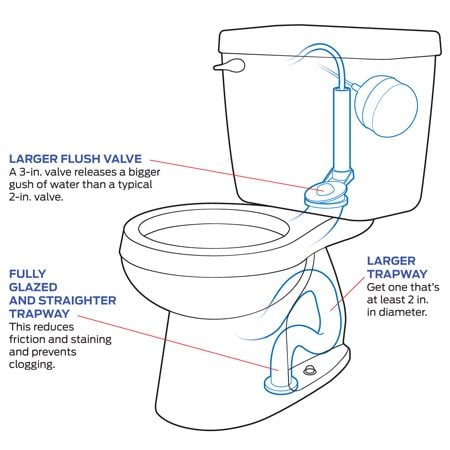
Since 1994, low-flow toilets that use 1.6 gallons per flush (gpf) or less have been the federal standard. The first generation of low-flow toilets sucked—or rather, they didn't. That's mostly because manufacturers tweaked a few things to reduce the amount of water used but didn't change the basic design. You had to flush the darn thing twice (so much for water savings!). But 15 years later, more of these toilets actually work. Manufacturers have made significant design improvements such as larger trap-ways to prevent clogging and larger flush valves that allow a more powerful rush of water to enter the bowl. The following tips will make choosing a new toilet a lot easier.
Don't pinch pennies
You can get a “contractor special” for less than $75. But everything from the working parts to the quality of the glazing will likely be low quality. And don't expect a powerful flush from a cheap toilet. You're going to use your toilet every day for years, so get a good one. Plan to spend $100 to $500 for a gravity toilet and $225 to $600 for a pressure-assist model.
Shop plumbing supply houses and bathroom showrooms
Home centers offer some but not all of the top-ranked toilets. For the widest selections in makes and models, visit bathroom showrooms and check online retailers.
Unique features can cost you later
Custom seats and unusual flush mechanisms add a cool factor, but they'll cost you time, money and frustration if they ever need replacing. A replacement custom seat, for example, costs more than $100 (if you can even find one years later).
Solve a sweating tank problem
If a sweating, dripping toilet tank has been a problem with your current can, choose a pressure-assist model. Since the water is held inside an inner tank, the outer tank won't sweat. Or if you prefer a gravity toilet, order one with factory-installed tank insulation for an additional $50 to $100 (depending on the model).
A good flusher
A good flusher
Figure A: Anatomy of a Good Flusher
A toilet's flushing performance is what matters most. To find a top performer, shop with these features in mind.

Tip 1: Compare flush ratings online

A good flusher
1 of 1

A good flusher

Kohler Cimarron Comfort Height elongated 1.6 gpf, model K-3589; at home centers and online retailers.

us.kohler.com Photo courtesy of Kohler
Since you're probably going to live with your toilet for 10 years or more, it's worth doing 10 minutes of research before you buy. Compare independent test results of the “flushing performance” across manufacturers and specific toilet models by typing “toilet testing 2010” into a search engine.
For more toilet reviews, visit consumerreports.org and terrylove.com/crtoilet. Top-ranked toilets include specific models of Home Depot's Glacier Bay; Kohler's Wellworth and Cimarron; American Standard's Cadet 3 FloWise; and Gerber's UltraFlush.

Tip 2: Check for rebates on high-efficiency models

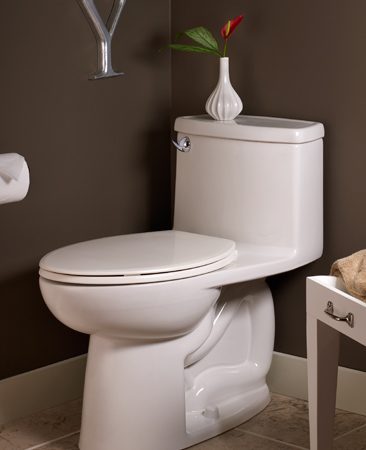
American Standard Cadet toilet
1 of 1

American Standard Cadet toilet

American Standard Compact Cadet 1.28 gpf, model 2403; at home centers and online retailers.

americanstandard.com Photo courtesy of American Standard
A toilet accounts for a third of your household water use. High-efficiency toilets (HET) that use 1.28 gallons or less earn the EPA's WaterSense label. These can save 4,000 gallons of water per person annually, and some water utilities offer rebates if you install one (check with yours). However, check independent test results before you buy (see the Web sites in Tip 1 above). Our plumbers report more staining and clogging problems with some high-efficiency models.

Tip 3: Get a pressure-assist toilet if a clean bowl using less water is a top priority

A pressure-assist toilet
1 of 1

A pressure-assist toilet

Gerber Ultra Flush pressure-assist 1.6 gpf, model 21-302; at plumbing showrooms and online retailers.

gerberonline.com
According to the plumbers we spoke with, pressure-assist toilets are more water-efficient flushers than gravity toilets. They have a separate tank that holds water under pressure, which releases with great velocity and removes waste thoroughly when you flush. They're also pricier ($100 plus) and a lot noisier than gravity types. (See our field editor comments below.) Finding parts and making repairs can also be more of a headache with pressure-assist toilets.
For more info on gravity and pressure-assist toilets, type “toilet performance” in the search box above.

Tip 4: Make cleaning easier

A wall-hung toilet
1 of 1

A wall-hung toilet

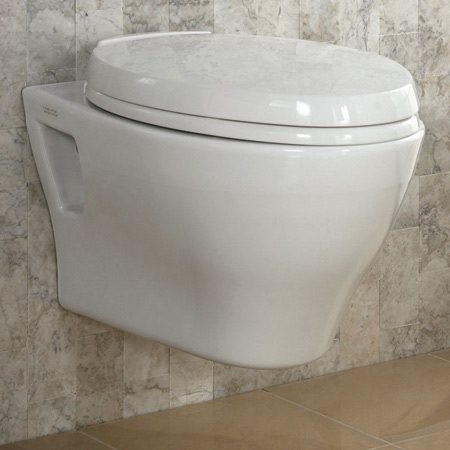
IMAGE DESCRIPTION (the cutline) Toto Aquia wall-hung high-efficiency dual-flush 1.6 and 0.8 gpf; at plumbing showrooms and online retailers.

totousa.com Photo courtesy of Toto
One-piece toilets are easier to clean (fewer nooks and crannies), but they're also more expensive and can be harder to install than a two-piece unit (they're a lot heavier than a separate bowl and tank). If you're feeling flush and want truly easy cleaning, consider a wall-mounted toilet.
Tips From Our Field Editors
Our field editors from across the country share their insights and experience with new toilets.
“Ho. Lee. Cow. We HATE our toilet. It claims the ability to flush 24 golf balls. Seriously. Maybe it could do 24 golf balls one at a time over a two-week period with a string pulling them down.”
-- Murph Krajewski
Beware of Pressure-Assist Noise
“Our builder installed the LOUDEST toilets in the world. When someone flushes, I have to pause the TV so I don't miss any dialogue. I installed a gravity toilet in my basement, and when our newborn is napping, I make everyone go there to potty!”
-- Jason Hirsbrunner
“My pressure-assist toilet flushes extremely well, but it's very loud. It sounds like it's flushing the whole bathroom down with it.”
-- Tom Rohlf
Beware of Nonstandard Parts
“We got an “uber-cool” toilet and I wish we hadn't. The seat is custom, so we'll have to spend $115 to replace it someday, and the innards aren't normal, so when things eventually wear out, we'll be rigging it with odds and ends to make it work.”
-- Kristin Green
Colored Toilets make a House Harder to Sell
“Most people can compromise when it comes to a low vs. high, round vs. elongated toilet, but color is almost always nontransferable from one owner to another! Avoid designer color toilets like the plague.”
-- Joseph Papay, Craftsman & Design Services
Cushioned Seats Don't Age Gracefully
“The first one didn't fit, the next one seemed OK until it cracked and pinched your leg when you sat on it, and the last one made a humorous sound when you sat down. No more cushioned seats!”
-- Bruce Dexter
Add A Tush of Class and Get a Slow-Close, Removable Seat
“We really like the slow-drop seats with the quick disconnect feature for easy cleaning. With two little ones, it saves slamming seats in the middle of the night and makes cleaning a snap.”
--Jack Bauer

Tip 5: Consider a taller throne for comfort

A taller toilet
1 of 1

A taller toilet

Gerber Avalanche high-efficiency 1.28 gpf, model 21-824, 17-in. ErgoHeight; at plumbing showrooms and online retailers.

gerberonline.com Photo courtesy of Gerber
Toilets that comply with the Americans With Disabilities Act have higher bowl heights of 17 in. or 19 in. vs. the standard 15 in. A higher bowl can be more comfortable for taller and older people and easier on backs and knees. But it can be harder for kids and shorter folks to use, and it costs $50 to $100 more. If you're not sure, sit on the toilet in the store. It feels silly, but you'll get what you want.

Tip 6: Measure the rough-in before you buy

Measure the rough-in
1 of 1

Measure the rough-in

The rough-in is the distance from the center of the toilet flange (the hold-down bolts) to the wall. Buy a toilet that fits the rough-in distance so you don't have the difficult job of moving the flange.
The distance from the wall to the middle of the flange bolts that hold down the toilet will narrow your toilet choices. Twelve inches is standard, but 10-in. and 14-in. models are available. Unless you're significantly remodeling, make installation easier by choosing a toilet with the same rough-in as your existing toilet. Make sure to account for the thickness of your baseboard.
For how-to tips on replacing a toilet, type “replace a toilet” in the search box above.

Tip 7: Beware of bigger bowls

Elongated bowls are 2 in. longer and more comfortable for many people. But before you upgrade from a standard round bowl, take some measurements. We've heard a lot of stories about doors and drawers that couldn't be opened after an elongated bowl was installed.

Tip 8: Save water with a dual-flush toilet

A dual-flush toilet
1 of 1

A dual-flush toilet

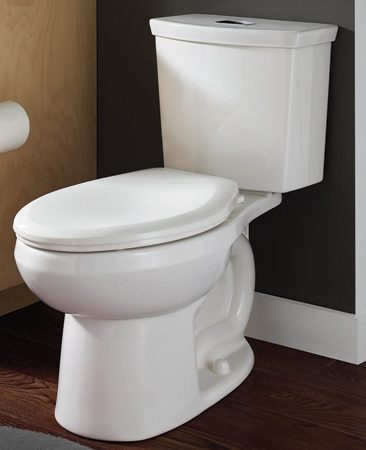
American Standard H2Option Siphonic Dual Flush Elongated 1.6 or 1.0 gpf, model 2887- 216; at home centers and online retailers

americanstandard.com Photo courtesy of American Standard
These have a .8-gpf button for liquids and a 1.6-gpf button for solids and use about 25 percent less water than a regular 1.6-gpf toilet. Dual-flush toilets are available in both gravity and pressure-assist models. They're pricier than other types (an additional $150 to $300 depending on the model) and they come in fewer color and style options. Also, the flush button or handle can be awkward to push on some models.


A special thanks to "The Family Handyman" for this article.
And for assistance with all of your Home Repair needs, Pro-Fix Home Repair stands ready to help.  Give us a call at 770-575-2533.
Review of Pro Fix Home RepairGive us a call @ 770-575-2533 or www.ProFixHomeRepair.com Reviews